
What Is The Chemical Composition Of Graphite?
Leave a message
The chemical composition of graphite is carbon.
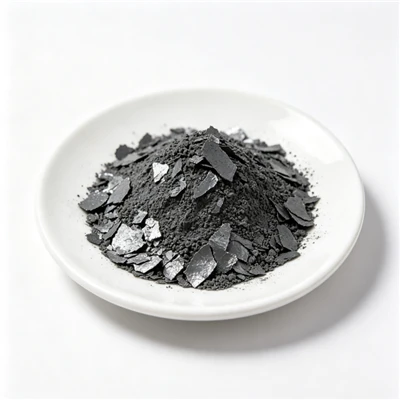
Graphite is a naturally occurring non-metallic element composed primarily of carbon and is found in various geological systems. It exists in diverse forms, the most familiar being the crystalline graphite used in pencil cores. Typically black in color and soft in texture, it leaves marks easily on paper. Additionally, graphite possesses excellent electrical and thermal conductivity, making it a vital material across numerous industrial and technological sectors.
Chemically, graphite consists of carbon (symbol: C). It has an atomic number of 6 and an atomic weight of 12.01 on the periodic table. Its crystal structure features a hexagonal lattice of carbon atoms, which imparts high chemical stability. Under standard temperature and pressure, graphite remains stable and resists oxidation or decomposition.
Due to its excellent electrical and thermal conductivity, graphite is widely utilized in industry. For instance, it is used to manufacture graphite electrodes and components for iron and steel production. It also serves as a raw material for pencil cores, pigments, and paints. In the electronics industry, graphite is a common material for electrical contacts, optical equipment, and sensor components. In recent years, it has also played a significant role in advanced technology; for example, in nanotechnology and materials science, graphite frequently serves as a foundational component for nanomaterials and high-performance composites.
In summary, graphite is a common non-metallic material composed of carbon that is widely found in nature and utilized across many fields. As it is composed of carbon, it exhibits excellent electrical and thermal conductivity, enabling its application in a variety of sectors.