
How to determine whether graphite is artificial or natural
Leave a message
Assessment Based on Appearance
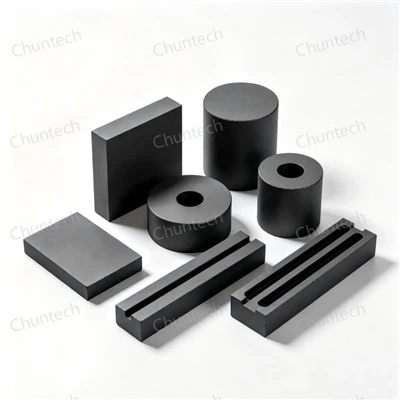
Natural graphite typically appears black, grayish-black, or grayish-white, with a smooth surface and a certain metallic luster. In contrast, artificial graphite has a more uniform appearance-usually black or grayish-black-and a rougher texture, lacking the luster found in natural graphite.
Assessment Based on Physical Properties
Natural graphite generally exhibits higher hardness and brittleness; its hardness can be tested using a hardness tester or by scratching it against quartz glass. Artificial graphite, however, is softer and typically does not scratch quartz glass. Additionally, natural graphite becomes electrically conductive at high temperatures, a phenomenon not typically observed in artificial graphite.
Assessment Based on Chemical Properties
Natural and artificial graphite also differ in their chemical properties. Natural graphite releases gas when reacting with oxidizing agents, whereas artificial graphite does not. Furthermore, natural graphite possesses a degree of hydrophilicity and can float on water, while artificial graphite is denser and does not float easily.
In summary, by evaluating factors such as appearance, physical properties, and chemical properties, we can accurately determine the origin of the graphite and ascertain whether it is artificial.